
 Available in US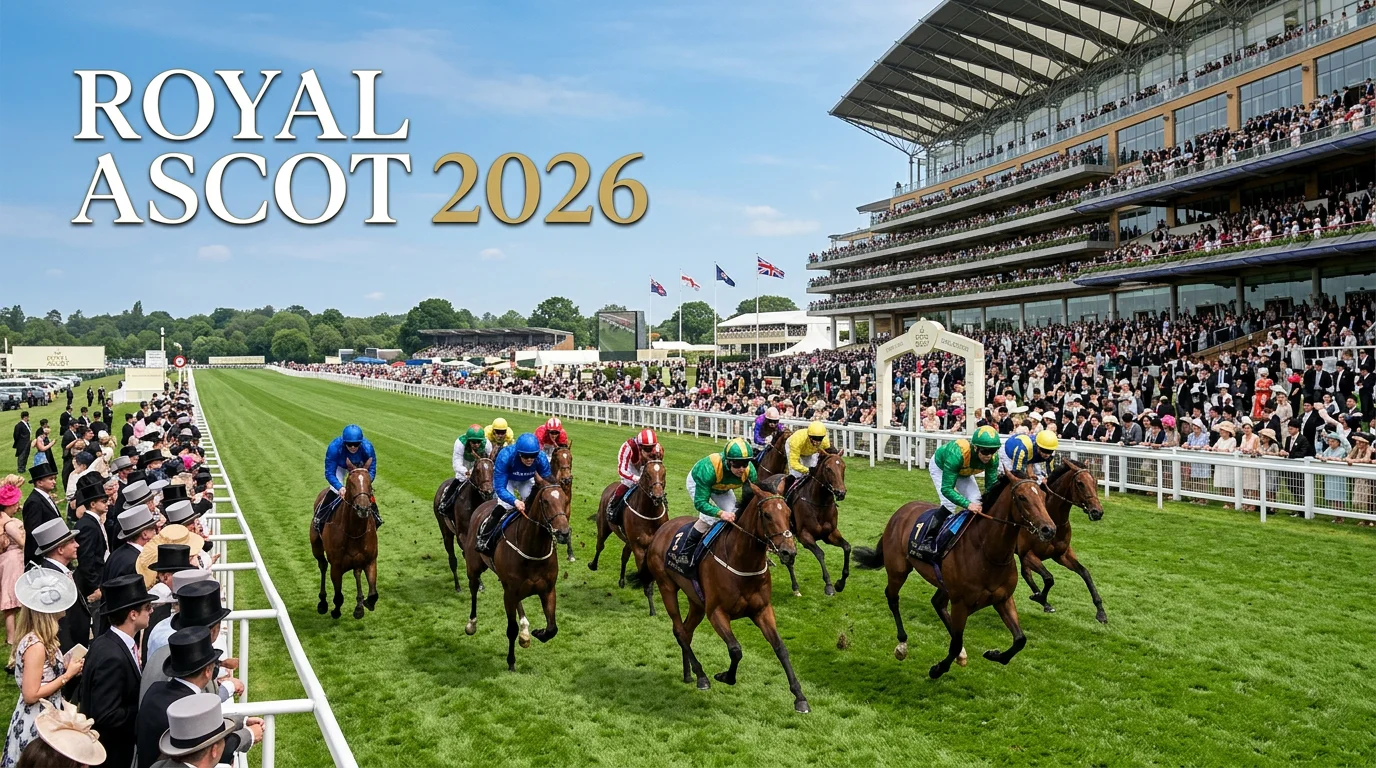
Five Days at Flat Racing’s Showpiece
Five days, thirty races, 5 million television viewers — Royal Ascot is where flat racing’s elite converge for the most prestigious meeting on the British calendar. It is not only pageantry and morning dress; for punters, it is the most competitive week of flat racing in Europe, with Group 1 fields that attract international challengers from France, Ireland, Japan, Australia, and America. The quality of the racing creates a paradox: the deeper the talent pool, the harder it is to find the winner, but the better the odds available for those who do their homework. Royal Ascot Betting Guide 2026 — More on this topic at online horse betting sites.
Where the sport meets the spectacle — and in betting terms, where the best-informed punters separate themselves from the crowd. This guide breaks down the week day by day, identifies the betting strategies that consistently deliver value at Ascot, and covers the practical essentials for anyone planning to attend in person.
Day-by-Day Highlights
Tuesday — Queen Anne Stakes. The meeting opens with the Queen Anne, a Group 1 mile race that sets the tone for the week. This is a relatively small field — typically eight to twelve runners — with established milers who have proven themselves at the highest level. Betting markets are often tight, with two or three runners dominating the market. The supporting card includes the Coventry Stakes for two-year-olds, an early indicator of the juvenile talent that will shape the rest of the flat season.
Wednesday — Prince of Wales’s Stakes. Widely regarded as one of the best middle-distance races in the world, the Prince of Wales’s attracts Classic winners and international challengers over a mile and two furlongs. The Duke of Cambridge Stakes (Group 2, fillies and mares) and the Royal Hunt Cup (a heritage handicap over a mile with a maximum field of thirty) provide contrasting betting opportunities: the former is a form puzzle between classy fillies, while the latter is a cavalry charge where draw bias and each-way terms dominate the betting approach.
Thursday — Gold Cup. The Ascot Gold Cup over two miles and four furlongs is the week’s stamina showpiece and the centrepiece of Ladies’ Day. The race attracts stayers from across Europe, and repeat winners are common — the best stayers have limited alternative targets at this level. The Britannia Stakes, a handicap for three-year-olds, runs on the same card and attracts a full field of thirty, making it one of the strongest each-way betting races of the week. With total British prize money reaching £153 million in 2025, Ascot accounts for a disproportionate share of the highest-value races.
Friday — Commonwealth Cup and Coronation Stakes. Friday delivers two Group 1 sprints: the Commonwealth Cup over six furlongs (three-year-olds) and the Coronation Stakes over a mile (fillies). The Commonwealth Cup has become the definitive test for the fastest three-year-olds in training, and the ante-post market is typically one of the most active of the week. The Wokingham Stakes, a six-furlong handicap, is the punter’s race of the day — big field, competitive, and heavily influenced by draw position.
Saturday — Diamond Jubilee Stakes. The final day features the Diamond Jubilee Stakes, a Group 1 six-furlong race open to older sprinters. The supporting card includes handicaps across various distances, and by Saturday the market has often identified betting trends — trainers and jockeys in form, ground conditions settled — that inform more confident selections. The Chesham Stakes for two-year-olds closes the meeting and occasionally produces a future Classic contender at generous odds.
Ascot Betting Strategies
International runners are the great form puzzle of Royal Ascot. Horses arriving from France, Japan, or Australia bring form that does not translate directly to the British rating system. This information gap creates opportunity: if you can assess international form — through speed figures, race replays, and trainer patterns — you may find horses that the domestic market has undervalued. Conversely, the market sometimes overvalues the “mystery” of an international raider, pushing the price too short based on reputation rather than evidence. Treating international form with the same analytical rigour as domestic form, rather than either ignoring it or romanticising it, is the edge.
Heritage handicaps are Ascot’s betting heartland. The Royal Hunt Cup, the Britannia, and the Wokingham all feature maximum fields of twenty-eight to thirty runners. In these races, draw bias matters enormously. Ascot’s straight course over shorter distances has historically favoured high draws in soft conditions and low draws on quicker ground, though the pattern is not absolute. Checking the going and its interaction with draw position is the first analytical step for any handicap selection at the Royal meeting.
Ante-post betting on the Group 1 races offers value for punters willing to commit early. The Queen Anne, Prince of Wales’s, and Gold Cup markets open weeks before the meeting, and prices available in May are substantially wider than those on the morning of the race. The risk of non-runners exists, but at Group 1 level, the horses involved are generally well-managed and entries are made with genuine intent.
Best Offers for Royal Ascot
Bookmakers treat Royal Ascot as a major promotional event, second only to Cheltenham in the volume and generosity of racing-specific offers. Enhanced each-way terms on the big handicaps — five or six places, 1/4 odds — are standard across the leading operators. Extra-place races change daily, so checking each morning is necessary to ensure you are betting with the most favourable terms available.
Money-back specials on beaten favourites, price boosts on ante-post Group 1 selections, and free bet bundles tied to the five-day meeting are all common. The new 10x wagering cap makes these offers easier to convert than in previous years. A £20 free bet with 10x turnover requires £200 in wagers — readily achievable across five days of racing with six or seven races per day. Shopping between bookmakers during Royal Ascot week is not optional; it is where a significant portion of the week’s value lives.
Beyond Betting: Going to Ascot
Royal Ascot is one of the few sporting events where the dress code is genuinely enforced. The Royal Enclosure requires formal morning dress for men (morning coat, waistcoat, top hat) and hats or substantial fascinators for women, with dresses or skirts at knee length or longer. The Queen Anne Enclosure has a slightly relaxed code but still requires smart attire — no jeans, no trainers, no fancy dress. The Windsor Enclosure is the most informal option but still enforces a smart-casual standard.
If you are attending for the first time, arrive early. The Royal Procession — the carriage drive along the straight mile before racing begins — is one of British sport’s most memorable sights, and it takes place at 2pm. The parade ring is worth visiting before each race: seeing the horses in the flesh provides information that no racecard can convey. A horse that looks fit, relaxed, and moving well in the paddock is a positive sign; one that is sweating heavily, on its toes, or reluctant to walk may be wasting energy before the race has even started. See also Horse Racing Accumulator Guide.
Betting on-course is an experience in itself. The Tote windows offer pool betting with its own dividend structure, while the on-course bookmakers in the betting ring quote prices that contribute to the Starting Price. Where the sport meets the spectacle — and at Royal Ascot, you can be part of both.
