
 Available in US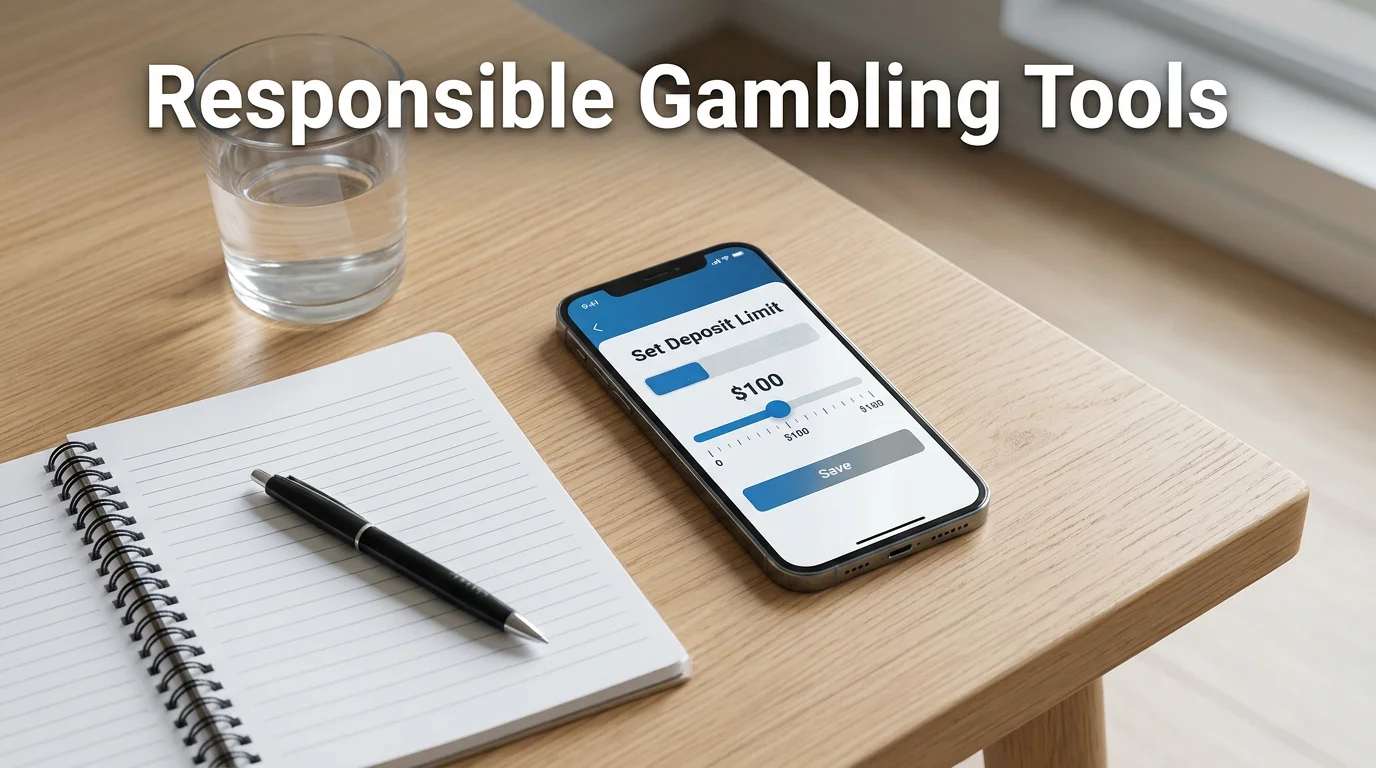
Mandatory Changes From June 2026
From 30 June 2026, every UKGC-licensed online operator must offer deposit limits calculated on a gross basis — meaning only the money you put in counts, not the money you win. This is not a recommendation. It is a mandatory requirement that changes what every punter sees in their account settings, and it represents the most significant structural shift in safer gambling since the Gambling Act 2005. The regulator is moving from voluntary guidance to hard rules, and the tools available to you are becoming more powerful as a result. Responsible Gambling Tools — More on this topic at online horse betting sites.
Responsible gambling tools are not restrictions imposed on you — they are controls you impose on yourself. Deposit limits, reality checks, session timers, loss limits, and time-outs all exist to keep you in the driver’s seat. Understanding what each tool does, how to set it up, and when to use it is not just good practice. As of 2026, it is the foundation of how every UKGC operator is required to present their platform to you.
Deposit Limits: The New 2026 Rules
The new deposit limit framework from the Gambling Commission requires operators to calculate limits based exclusively on gross deposits — the total amount of money transferred into your betting account. Under the previous system, some operators factored winnings into the available balance, which obscured how much the punter had actually deposited from their own funds. The gross basis removes that ambiguity: if your limit is £200 per month, you cannot deposit more than £200 regardless of what you have won or withdrawn during that period.
Every operator must prompt you to set a deposit limit when you open an account, and must remind you to review it every six months. The limit can be set on a daily, weekly, or monthly basis. Reducing your limit takes effect immediately. Increasing it triggers a cooling-off period — typically 24 hours — to prevent impulsive decisions to raise your ceiling in the heat of a losing run.
The practical impact for horse racing punters is significant. A Saturday of racing might involve bets across six or seven meetings. Without a deposit limit, the natural tendency is to top up the account when it runs low, particularly during a busy afternoon. With a gross deposit limit in place, you know exactly how much you can commit, and that boundary holds regardless of the afternoon’s results. This creates a structural framework for bankroll discipline that willpower alone often fails to provide.
Operators who fail to implement the new rules face enforcement action. The Gambling Commission conducted 9,700 compliance actions in 2024/25 alone — a more than doubling from the previous year — making it clear that regulatory expectations are backed by consequences.
Reality Checks and Session Timers
Reality checks are pop-up notifications that appear at set intervals during an active gambling session. They display the time you have been logged in and, in many implementations, a summary of your activity — deposits, withdrawals, bets placed, and net position. The purpose is straightforward: to interrupt the flow state that online gambling can create, where time passes unnoticed and spending escalates without conscious awareness.
Most bookmakers allow you to set the frequency of reality checks — every 15 minutes, 30 minutes, 60 minutes, or at other intervals. The notification typically requires you to acknowledge it before continuing, forcing a moment of reflection even if the impulse is to dismiss it immediately. The value lies in that moment: even a brief pause to read a summary of your session activity introduces a decision point that would not otherwise exist.
Session timers work alongside reality checks but operate as a hard limit rather than a soft prompt. You set a maximum session length — say, two hours — and when that time expires, you are logged out automatically. Some operators allow you to log back in immediately; others impose a cooling-off period before the next session. For horse racing punters following a full afternoon card, a session timer set to match the meeting’s duration keeps the activity bounded within a defined window.
Loss Limits, Time-Outs, and Self-Assessment
Loss limits cap the amount you can lose within a specified period — daily, weekly, or monthly. Unlike deposit limits, which control inflows, loss limits control net outcomes. If your weekly loss limit is £100 and you have lost £100 by Wednesday, you cannot place further bets until the limit resets. This tool directly addresses chasing behaviour: the pattern of increasing stakes after losses in an attempt to recover, which is one of the strongest predictors of gambling harm.
The UKGC Gambling Survey for Great Britain 2024 found that 2.7% of adults scored 8 or higher on the Problem Gambling Severity Index, with the 18-24 age group showing rates approaching 10%. Loss limits are one of the most effective tools for interrupting the behaviours that contribute to these figures, because they impose a boundary on the financial consequences of a bad run before the consequences compound.
Time-outs provide a temporary break from gambling — typically ranging from 24 hours to six weeks. Unlike GAMSTOP, a time-out applies only to the individual operator where you set it, and it is reversible after the period expires without needing to contact anyone. Time-outs are useful for punters who want to step away during a specific period — a stressful week, a Festival where they know they might overextend — without committing to a full self-exclusion across all platforms.
Self-assessment questionnaires are offered by most major bookmakers within their safer gambling sections. These typically follow a format similar to the PGSI, asking questions about time spent gambling, chasing losses, borrowing to gamble, and the impact on daily life. The results are private and the tools are advisory rather than enforcing — they will not lock your account — but they provide an honest snapshot that many punters find useful as a periodic check-in.
Setting Up Your Safer Gambling Profile
Every major UK bookmaker places safer gambling tools in the account settings menu, though the exact location and labelling vary. On Bet365, the tools are under “Responsible Gambling” in the account menu. Coral and Ladbrokes group them under “Safer Gambling.” Paddy Power and William Hill use similar terminology. The tools themselves are functionally identical across operators — the UKGC mandates what must be available — but the interface differs.
Start with a deposit limit. Set it at a level that reflects your discretionary spending — the amount you can lose completely without affecting your ability to pay bills, save, or maintain your standard of living. If that number is £50 per month, set it at £50. If it is £500, set it at £500. The point is that the number is yours and it is fixed, not subject to renegotiation during a bad afternoon.
Add a reality check at whatever frequency suits your betting pattern. If you bet intensively during a two-hour Saturday card, a 30-minute check provides three interruptions across that window. If you bet casually across the week, a 60-minute check may be sufficient. There is no cost to setting these up and no downside to having them active — they can be adjusted at any time. See also PayPal Horse Racing Betting Sites.
Consider a loss limit as a secondary control. A deposit limit controls how much goes in; a loss limit controls how much can go wrong. Together, they create a two-layer framework that keeps both inflow and outflow within boundaries you have chosen in advance. Tools that keep you in the driver’s seat — set them once, adjust as needed, and let the structure do the work that willpower cannot always manage on its own.
