
 Available in US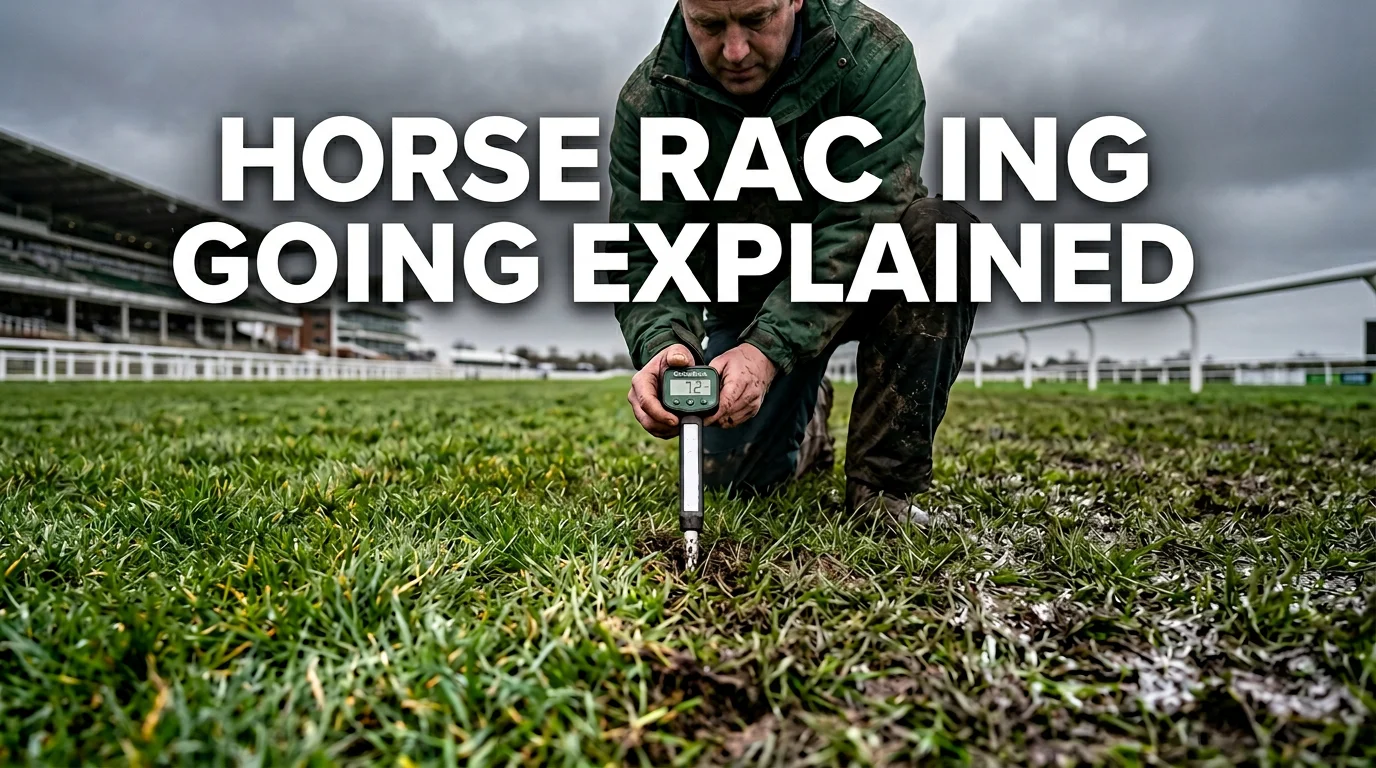
The First Thing Professionals Check
Going is the first thing a professional punter checks before placing a bet, and it is the last thing most casual bettors think about. The term describes the condition of the racing surface — how soft or firm the ground is — and it influences race results more directly than almost any other variable. A horse that breezes through soft ground will struggle on firm, and vice versa. Ignoring the going is like backing a sprinter in a marathon: the talent may be there, but the conditions make it irrelevant. Horse Racing Going Explained — More on this topic at online horse betting sites.
This is not a subjective assessment left to opinion. British racecourses use the GoingStick, an electronic penetrometer that measures the firmness and moisture content of the turf, producing a numerical reading that translates into the official going description. With 5.031 million racecourse attendees in 2025, the going matters to everyone — from the trainer deciding whether to run, to the jockey planning how to ride, to the punter deciding where to place their money. The ground tells the story, and this guide teaches you how to read it.
The Going Scale
British turf racing uses a seven-point going scale, running from firm at one end to heavy at the other. The full sequence is: hard, firm, good to firm, good, good to soft, soft, heavy. Hard ground is exceptionally rare in Britain and is generally considered unsafe — racecourse clerks will water the track to avoid it. Heavy ground, at the other extreme, describes waterlogged conditions where horses sink into the surface and races become tests of raw stamina rather than speed.
The GoingStick provides a numerical value that maps to these descriptions. According to the official TurfTrax Going Index scale, readings of 13.0–15.0 indicate hard ground. Between 11.0 and 12.9 is firm. Between 9.0 and 10.9 is good to firm. Between 7.0 and 8.9 is good. Between 5.0 and 6.9 is good to soft. Between 3.0 and 4.9 is soft, and below 3.0 is heavy. However, the GoingStick reading is not a universal standard — the same number can correspond to different going descriptions at different courses due to variations in soil type and turf composition. The verbal description from the clerk of the course remains the official going, with the GoingStick providing supplementary data.
All-weather surfaces use a separate scale. Standard is the equivalent of good ground on turf. Slow indicates a riding surface that has become slightly less pacey, and fast indicates quicker-than-normal conditions. All-weather going is generally more consistent than turf because the synthetic surfaces are designed to drain efficiently and maintain a stable structure, but it still varies with weather, usage, and maintenance cycles.
Intermediate descriptions — such as “good to firm in places” or “good, good to soft in places” — indicate that the going varies across different parts of the course. The inside rail may ride softer than the outside, or the uphill sections may dry faster than the flat stretches. These variations create tactical opportunities for jockeys who know how to position their horse on the better ground, and they add a further layer of analysis for punters.
How Going Affects Performance
The physics are straightforward. Firm ground is fast: hooves strike a solid surface and the energy is returned efficiently, favouring horses with a quick, low action — sprinters and milers that rely on speed rather than stamina. Soft ground is slow: hooves sink into the turf, each stride requires more effort, and the race becomes a war of attrition that rewards strength, stamina, and a high knee action that lifts the feet clear of the clinging surface.
Breed plays a significant role. Flat-bred horses with light frames and long, low strides tend to excel on faster ground. National Hunt horses, bred for stamina and endurance, are generally more versatile across ground conditions but many perform best with some give in the surface. Horses with a high proportion of staying blood in their pedigree — descendants of stamina-focused sires — are statistically more likely to handle soft and heavy ground.
Injury risk correlates with extremes. Firm ground increases the concussive impact on legs and joints, raising the risk of stress fractures and tendon injuries — particularly in older horses or those with pre-existing conditions. Heavy ground places enormous strain on muscles and ligaments through the effort of pulling through the surface. Trainers routinely withdraw horses from unsuitable going to protect their long-term soundness, and these withdrawals directly affect the betting market. With total prize money reaching £153 million in 2025, trainers have significant financial incentive to place their horses on the right ground at the right time.
The going’s impact on race times is dramatic. The same horse over the same distance at the same course might run ten seconds faster on good ground than on heavy. Speed figures attempt to normalise these differences, but no adjustment is perfect, which is why form analysis must always consider the conditions under which past performances were produced.
Checking the Going Before You Bet
The official going is declared by the clerk of the course, typically the evening before the meeting and again on the morning of racing. This morning declaration is the definitive statement, though it can be updated if conditions change — overnight rain being the most common cause of an amended going description between declaration and the first race.
The Racing Post, Betfair, and At The Races websites all publish the official going alongside each race in their racecards. The BHA’s own website provides the clerk’s report, which often includes additional detail: whether the course has been watered, whether there is a forecast for rain, and whether the going is expected to change during the day. This supplementary information matters because the going can genuinely shift between the first and last races of an afternoon card, particularly at meetings in the spring and autumn when the weather is changeable.
Social media has added a real-time layer. Trainers, jockeys, and racing journalists frequently post course inspections, walk-the-course videos, and GoingStick readings that provide granular detail beyond the official description. Following these sources on the morning of a meeting gives you the most current information — often before bookmaker odds have fully adjusted to any change in conditions.
Going Preferences in Form Analysis
Every serious form analysis should include a going filter. Modern racecard platforms allow you to filter a horse’s form record by ground conditions, showing win and place percentages on different goings. A horse with five wins from eight starts on soft ground and zero wins from six starts on firm has a clear preference that should dominate your assessment regardless of how impressive its most recent run looked.
The form figures alone do not always reveal going preference. A horse that finished fourth on firm ground may have run a career-best effort but was simply outpaced by rivals better suited to the surface. Conversely, a horse that won on heavy ground may have benefited from the conditions neutralising faster rivals rather than demonstrating a genuine affinity for soft conditions. Looking at how a horse ran — whether it travelled well but was outstayed, or whether it relished pulling through the ground — adds qualitative depth to the quantitative filter. See also Tote Betting Explained.
Trainers with large strings often develop reputations for targeting specific ground conditions. Certain yards are known for producing horses that excel on quick ground, while others specialise in soft-ground stayers. Tracking these trainer-ground patterns adds another dimension to your going analysis. The ground tells the story — and the form book, filtered by going, tells you whether each horse can read it.
