
 Available in US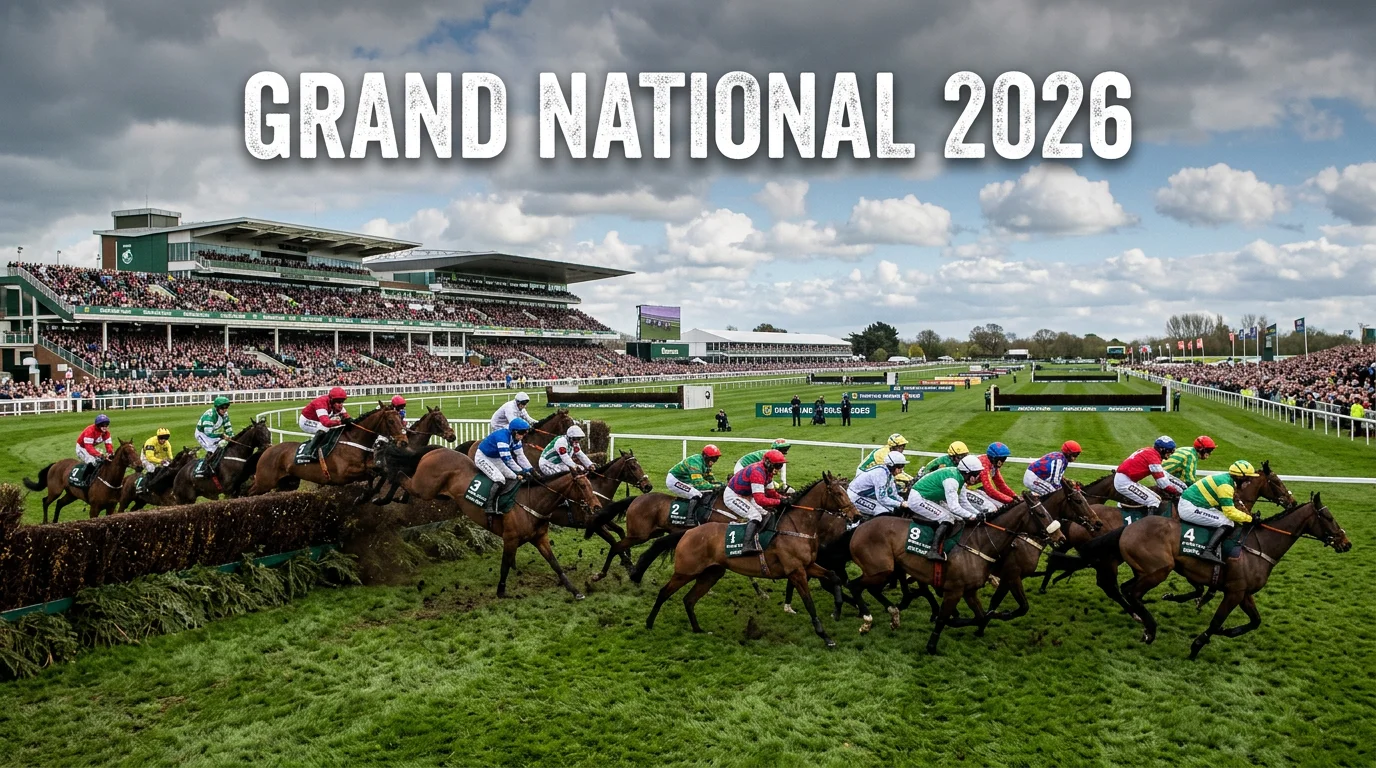
Britain’s Biggest Betting Race
The Grand National pulls in 5.2 million television viewers, generates well over £150 million in betting turnover, and remains the one horse race that the entire country pays attention to. It is the single day of the year when colleagues who have never studied a racecard organise an office sweepstake, when families gather around screens, and when the phrase “I’ll have a flutter” enters the vocabulary of people who would never normally bet. The people’s race — and the most unpredictable handicap chase on the calendar. Grand National Betting Guide 2026 — More on this topic at online horse betting sites.
That unpredictability is both the challenge and the appeal. Forty runners, thirty fences over roughly four miles and two furlongs, a handicap weight range that gives every horse a theoretical chance. Favourites win less often than in any other major race. Long-odds winners are not anomalies — they are the pattern. Betting on the Grand National requires a different approach than betting on a standard Saturday handicap, and this guide lays out the framework for making that approach work.
The Race: What Makes It Unique
The Grand National is run at Aintree, Liverpool, and there is nothing else like it in British racing. The course features thirty unique fences, including the infamous Becher’s Brook (where the landing side is lower than the take-off side, creating a drop that has unseated generations of riders), The Chair (the tallest fence on the course at five feet two inches, with a six-foot ditch in front), and Canal Turn (where horses must jump and immediately change direction). These obstacles demand a combination of bold jumping, intelligence, and endurance that most chasers never need to demonstrate elsewhere.
The distance — approximately four miles and two furlongs — is the longest of any major race in Britain. Stamina is not just important; it is the primary requirement. Horses that win over three miles may simply not get home over four. The race is a handicap, meaning the official handicapper assigns weights designed to equalise the field, with top-weighted horses carrying around 11st 10lb and the lightest runners around 10st. With 5.031 million total racecourse attendees across Britain in 2025, Aintree’s National meeting accounts for a significant share of the annual total, and the Grand National itself draws a uniquely diverse crowd — from seasoned racing fans to first-time visitors.
The history of upsets is long and well-documented. Mon Mome won at 100/1 in 2009. Auroras Encore won at 66/1 in 2013. Even in years where the favourite prevails, the nature of the fences means that any horse can fall, refuse, or be brought down at any point. This inherent randomness makes the Grand National a race where form analysis reduces the probabilities but never eliminates the chaos.
How to Bet on the Grand National
Each-way betting is the default approach for the Grand National, and for good reason. Standard terms on a forty-runner handicap offer four places at one-quarter the odds. Many bookmakers enhance this to five or six places for the National, sometimes paying at 1/5 the odds — a material improvement in expected value. Given that the favourite wins less than 15% of the time, having the safety net of four to six place positions is not just sensible — it is the mathematically rational strategy.
As Niall Sloane, ITV’s Director of Sport, has emphasised, the ITV deal ensures the biggest fixtures remain accessible on free-to-air television until 2030 — and the Grand National is the jewel in that arrangement. The race’s visibility drives the biggest single-day betting event in UK horse racing, and bookmakers respond with their most generous promotional offerings of the year.
Non-Runner No Bet deals are particularly valuable for the Grand National. The ante-post market opens months in advance, and prices at that stage are significantly longer than on the day. A horse quoted at 25/1 in February might be 14/1 by race morning as the market narrows. With NRNB, your stake is returned if the horse is withdrawn — eliminating the primary risk of ante-post betting while preserving the price advantage. Not all bookmakers offer NRNB on the National, and conditions vary, so confirming availability before placing your ante-post bet is essential.
Day-of-race specials include money-back offers if your horse falls at a specific fence, enhanced each-way terms, and acca boosts across the Aintree card. These promotions are generally most competitive in the 48 hours before the race, as bookmakers fight for share of voice in the busiest betting market of the year.
Picking a National Winner: Five Angles
Weight. The Grand National weight range is broad, and historical data shows a clustering of winners between 10st 7lb and 11st. Horses at the very top of the weights rarely win — the combination of distance, fences, and a quality handicap mark is simply too much to overcome. Light-weighted runners in the 10st-10st 7lb range have a strong statistical record, partly because they tend to be younger, improving types running off marks the handicapper has not yet caught up with.
Age. The optimal age window is eight to ten years old. Younger horses may lack the experience required to negotiate Aintree’s unique obstacles, while horses over eleven are fighting diminishing physical returns over a draining distance. The record of nine-year-olds in the National is particularly strong, balancing maturity with peak physical capacity.
Course form. Previous experience at Aintree is a significant positive. Horses that have completed the National course before — even without winning — have demonstrated that they handle the fences, the distance, and the atmosphere. A horse returning to Aintree after a solid previous attempt is a more reliable proposition than a first-timer, however talented, facing Becher’s Brook for the first time with forty rivals alongside.
Going. The going at Aintree in early April varies considerably year to year. Horses with proven soft-ground form are safer selections in most years, because the National course rarely rides genuinely quick. Checking each runner’s going record — specifically their win and place percentage on soft or good-to-soft ground — is a non-negotiable step in the selection process.
Trainer record. Certain trainers have a demonstrably superior record in the Grand National. Studying which trainers target Aintree specifically — rather than arriving with horses that happened to qualify — reveals where genuine intent lies. A trainer who has saddled multiple National runners and achieved places is more likely to have a horse prepared for the unique demands than one sending a runner for the first time.
Best Bookmaker Deals for the National
The Grand National attracts the most aggressive promotional competition of any single race. Enhanced each-way terms — five or six places at 1/4 or 1/5 odds — are near-universal among the major bookmakers. The incremental value of a fifth and sixth place in a forty-runner field is substantial, and shopping between operators for the best terms is worth the few minutes it takes.
Money-back if your horse falls is a popular promotion that effectively insures against the most common cause of loss in the National. Several bookmakers offer this as a free bet refund rather than cash, so understanding the settlement terms matters. A £20 free bet returned after a faller still has value, but it is not the same as £20 cash. See also Royal Ascot Betting Guide 2026.
Acca boosts across the full Aintree card — which features several high-quality races beyond the National itself — are worth considering for punters who have views across the day. The people’s race draws the biggest crowds, the widest margins, and the most generous promotions. Using them wisely is part of the strategy.
