
 Available in US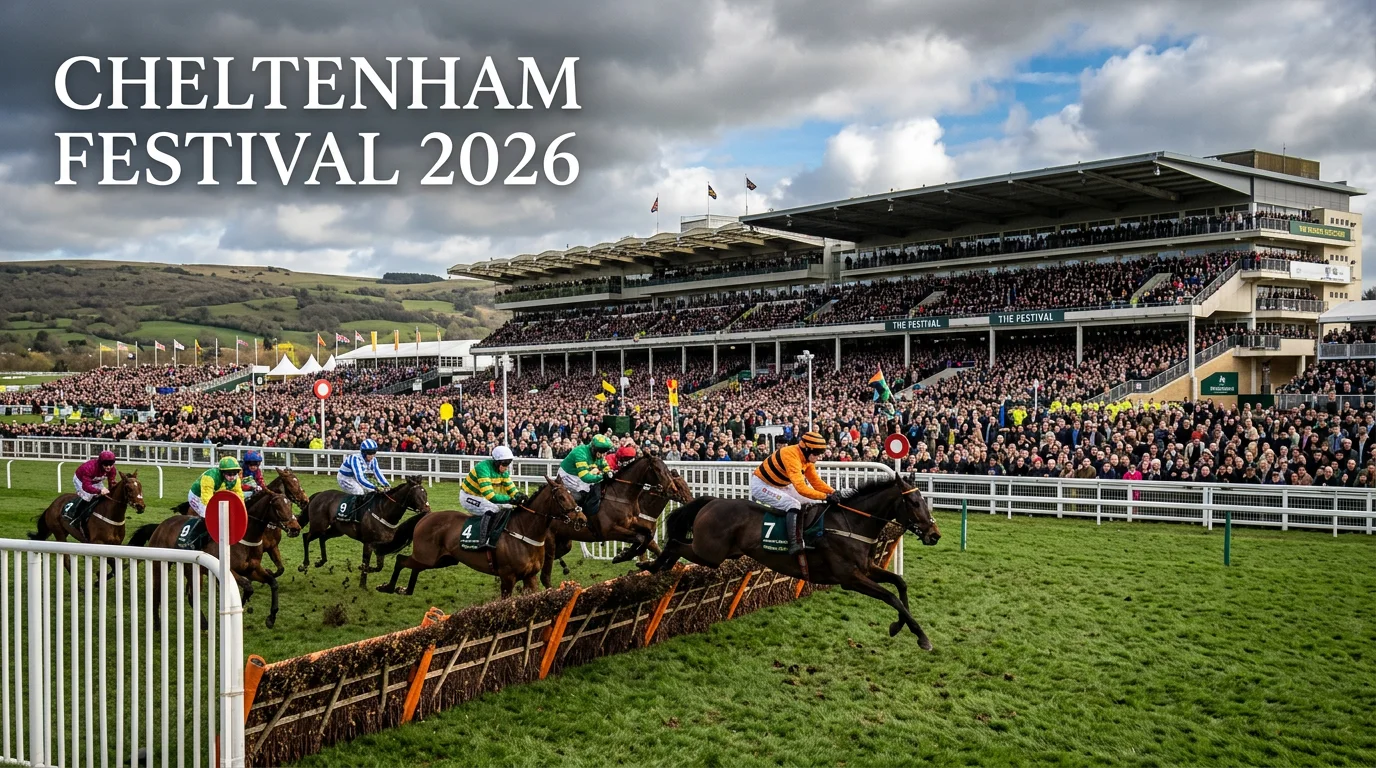
Four Days, £450 Million in Turnover
An estimated £450 million in betting turnover flows through the Cheltenham Festival over four days — no other horse racing event in Britain comes close. It is not just a festival; it is an annual stress test for bookmakers and punters alike. Fields are large, competition is fierce, and the betting markets move with an intensity that makes a routine Saturday card look sleepy by comparison. Cheltenham Festival Betting Guide 2026 — More on this topic at online horse betting sites.
For bettors, Cheltenham demands preparation. The best prices evaporate quickly, the ante-post markets have been open for months, and the sheer volume of information — form, going, jockey bookings, trainer patterns — can overwhelm anyone who arrives without a plan. Four days that define the jumping year — and this guide is designed to ensure you navigate them with clarity rather than chaos.
Day-by-Day Race Guide
Champion Day (Tuesday) launches the Festival with its flagship event, the Champion Hurdle. This is the two-mile hurdling championship, attracting the fastest jumpers in training. The card also features the Arkle Challenge Trophy for novice chasers over two miles, the Mares’ Hurdle, and the Supreme Novices’ Hurdle — traditionally the first race of the meeting and one of the most bet-upon contests of the week. The Supreme is a form analyst’s nightmare and a punter’s playground: exposed horses meet unexposed ones, the pace is relentless, and the ante-post market is notoriously volatile.
Ladies Day (Wednesday) centres on the Queen Mother Champion Chase, the two-mile chasing championship and arguably the most electrifying spectacle of the four days. The speed at which Champion Chase runners cover their fences is breathtaking, and the betting reflects the quality — short-priced favourites are common, making each-way value harder to find in the feature but readily available in the supporting races. The Coral Cup and the Cross Country Chase both attract large fields and provide genuine each-way opportunities for punters willing to go beyond the headline race.
St Patrick’s Thursday features the Stayers’ Hurdle over three miles, the stamina test of the hurdle division. The Ryanair Chase over an intermediate trip has grown in prestige and now attracts top-class chasers who find the Gold Cup distance slightly beyond them. The Pertemps Final, a handicap hurdle with qualifier rounds throughout the season, is a betting race par excellence: large field, competitive handicap, information advantages available to those who tracked the qualifier results.
Gold Cup Friday is the climax. The Cheltenham Gold Cup over three miles and two furlongs is jump racing’s ultimate test of stamina, jumping ability, and courage. It has produced some of the sport’s most iconic moments, and the betting market attracts money from every corner — casual once-a-year punters alongside hardened professionals. The supporting card includes the Triumph Hurdle for four-year-olds, the Albert Bartlett Novices’ Hurdle over three miles, and the Martin Pipe Conditional Jockeys’ Handicap Hurdle, which regularly produces big-priced winners and is a favourite target for each-way punters.
Cheltenham Betting Strategies
Ante-post betting is where the sharpest Cheltenham value is found. Prices in October and November for the following March are significantly more generous than those available on the day. The risk is non-runners — a horse that picks up an injury or fails to qualify for its target race leaves your stake lost. Non-Runner No Bet deals from selected bookmakers mitigate this risk on specific races, and identifying which operators offer NRNB on which events is the first step in any serious ante-post approach.
In big-field handicaps, each-way betting comes into its own. With sixteen or more runners, the standard terms offer four places at one-quarter the odds. During Festival week, many bookmakers enhance these terms to five or six places, significantly increasing the probability of collecting on the place portion. Targeting horses with proven Cheltenham form — the course is unique, with its famous hill and undulating track — adds a further edge, because many runners arrive from flatter, easier courses and underperform on the demands of Prestbury Park.
Festival specials — markets on top trainer, top jockey, and match bets between specific runners — offer alternative angles for punters who have strong opinions on the broader narratives of the week. The top trainer market, for instance, rewards those who study stable form across the full four days rather than focusing on individual races in isolation. Willie Mullins and Gordon Elliott have dominated this market in recent years, but the value often lies in assessing how deep each trainer’s hand is: a trainer with twelve runners across the week has more shots at winners than one with five, even if the quality of individual horses is comparable.
Timing matters across the four days. The opening races on Tuesday tend to offer the most volatile betting markets, as the on-course atmosphere and sheer anticipation drive impulsive money into favourites. By Thursday and Friday, the market tends to be sharper — professional money has arrived, casual punters have adjusted to the rhythm, and the odds more accurately reflect genuine probabilities. Punters who maintain discipline on the opening day, resisting the urge to overbet on the Supreme and the Arkle, often find better value later in the week when the noise settles.
Best Bookmaker Offers for Cheltenham 2026
Cheltenham is the week when bookmakers compete hardest for racing punters. Welcome offers are supplemented by racing-specific promotions: extra places on each-way bets, money-back specials on close losers, best-odds-guaranteed enhancements, and acca boosts on Festival multiples.
The most valuable promotions during Festival week tend to be the extra-place offers. When a bookmaker pays six places instead of four on a twenty-runner handicap, the each-way value shifts meaningfully in the punter’s favour. These offers vary by race and by day, so checking terms each morning before placing is essential rather than assuming yesterday’s terms still apply.
Free bet offers tied to qualifying bets during the Festival are common. Under the new 10x wagering cap introduced in January 2026, these promotions are simpler to convert into real value than they were under the old 30-50x requirements. A £10 free bet with 10x wagering means £100 in turnover before withdrawal — achievable within a single afternoon of racing. This regulatory change has made Festival promotions genuinely more punter-friendly, even if the headline amounts have adjusted downward.
2026 Changes: Capacity Cap and What It Means
The daily attendance limit at Cheltenham has been reduced to 66,000 for 2026, the second consecutive reduction following years of overcrowding complaints. In 2025, total attendance across the four days was 218,839 — the lowest in a decade — partly reflecting the previous cap adjustment and partly reflecting broader cost-of-living pressures on ticket sales.
For on-course punters, the lower capacity means a less frenetic experience: shorter queues, better views, and easier access to the betting ring. For online punters — who make up the vast majority of Cheltenham bettors — the cap is largely irrelevant to the betting experience, but it does affect the on-course market that determines Starting Prices. Fewer people in the betting ring means less liquidity in the SP calculation, which can increase volatility in starting prices, particularly on lower-profile races outside the feature events. See also Grand National Betting Guide 2026.
The capacity reduction is part of Cheltenham’s broader “Room to Race” initiative, which aims to improve racegoer comfort and safety. For bettors, the practical takeaway is straightforward: if you plan to attend in person, book early, because 66,000 daily tickets for the most popular jump racing event in the world will sell out. If you are betting from home, the quality of the racing and the depth of the betting markets remain unchanged. Four days that define the jumping year — and in 2026, those four days arrive with slightly more space and exactly the same intensity.
