
 Available in US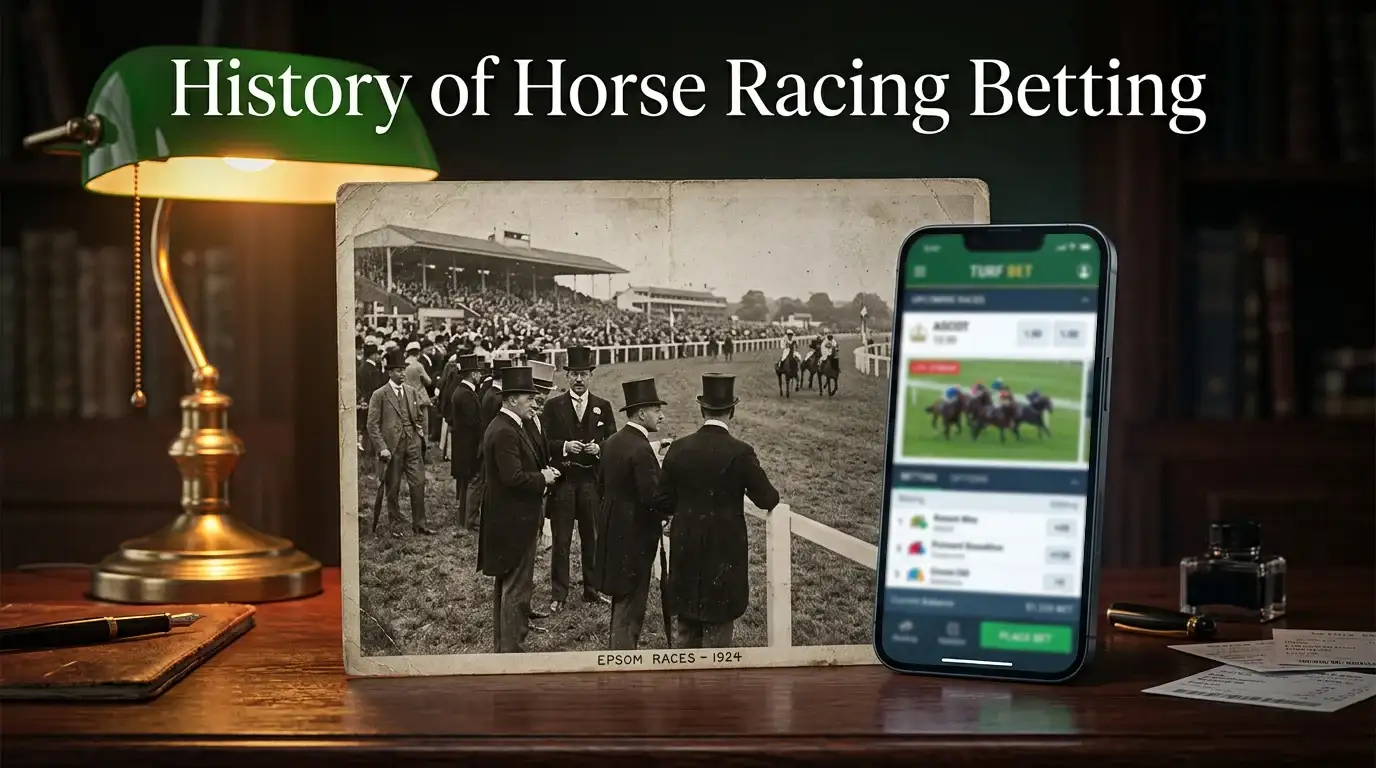
From Stuart Match Bets to Mobile Apps
Horse racing and gambling have been inseparable in Britain since the Stuart monarchs first formalised racing at Newmarket in the seventeenth century. Before there were bookmakers, there were match bets between aristocrats. Before there were betting shops, there were illegal street runners. Before there were apps, there were on-course tic-tac men signalling odds with hand gestures across the rails. The arc of horse racing betting in Britain is the arc of the country itself — from aristocratic pastime to mass entertainment to digital industry, with every transformation leaving its mark on how we bet today. History of Horse Racing Betting in Britain — More on this topic at online horse betting sites.
From a handful of private wagers between Stuart courtiers to an online market generating £766.7 million in gross gambling yield from remote horse racing betting alone, the journey from the racecourse rail to the betting app is one of the most remarkable commercial evolutions in British social history.
The Origins: Royal Sport and Early Wagers
Racing for wagers between two horses — match races — existed in Britain from at least the reign of Charles II, who was an enthusiastic rider and patron of Newmarket. The town in Suffolk became the headquarters of British racing, and the informal wagering that accompanied matches was conducted between owners, their associates, and anyone else with money and an opinion. There was no public betting market, no bookmaker, and no regulation. The wager was a private agreement between two parties who disagreed about which horse was faster.
The Jockey Club, founded around 1750, brought the first structure to both the sport and its wagering. The Club established rules of racing, standardised race conditions, and — crucially — created the framework within which betting could operate with some degree of fairness. Tattersalls Rules on Betting, formulated at the famous Tattersalls auction house in London, became the de facto code for settling disputes between bettors and bookmakers. These rules governed horse racing betting for over two centuries and still influence modern practice.
The professional bookmaker emerged in the early nineteenth century as horse racing grew from private match races to public spectacles with multiple runners. On-course bookmakers — men who stood at the rails and quoted odds to the crowd — became a fixture at every racecourse. They calculated their own margins, managed their own risks, and paid out in cash on the day. It was a cash-and-handshake business, conducted in the open air, with no regulation beyond custom and the threat of losing your pitch if you welched on a bet.
The Street Era: 1960–2000
Off-course betting — placing a bet anywhere other than at the racecourse — was illegal in Britain until the Betting and Gaming Act of 1960. For a century before that, an underground economy of illegal bookmakers, street runners, and back-room betting offices served the demand that existed despite the prohibition. Factory workers, miners, and shopkeepers placed bets through intermediaries, and the money flowed through an unregulated system that generated enormous sums while remaining technically criminal.
The 1960 Act legalised licensed betting offices, and the 1961 Betting Levy Act established the principle that the betting industry should fund the sport it profits from. The two pieces of legislation together created the framework for modern British horse racing betting: legal high-street shops, a Levy to support the sport, and a licensing system to ensure minimum standards. William Hill, Ladbrokes, and Coral — already operating in various forms — expanded rapidly into the newly legal retail market, opening chains of betting shops across Britain.
The high-street era that followed was defined by Saturday afternoon racing culture. Betting shops were sparse, utilitarian environments: no seating in the early years (deliberately, to discourage lingering), live commentary over speakers, results posted on boards, and bets written on paper slips and handed across the counter. The aesthetic was intentionally unwelcoming — a legacy of moralistic resistance to legalisation — but the demand was insatiable. By the mid-1970s, the number of betting shops across Britain had peaked at nearly 15,000, and the vast majority of their turnover came from horse racing.
The satellite television era of the 1980s and 1990s transformed the in-shop experience. SIS (Satellite Information Services) began broadcasting live racing into betting shops, replacing commentary with moving pictures and making the shops a destination rather than a transaction point. The afternoon spent watching and betting on live racing became a social ritual for millions of British men — a culturally specific experience that no other country replicated at the same scale.
Going Digital: 2000–2020
The internet arrived in horse racing betting at the turn of the millennium, and within a decade it had fundamentally restructured the industry. The first online bookmaker sites launched in the late 1990s, offering fixed-odds betting on racing through a web browser. The interfaces were crude, the connections were slow, and the experience was a pale shadow of the betting shop — but the convenience was transformative. You could place a bet without leaving your house, at any time of day, on any meeting.
Betfair launched its betting exchange in 2000, introducing the concept of peer-to-peer betting to a mass audience. The exchange model — where punters bet against each other rather than against a bookmaker — represented the most radical innovation in betting since the legalisation of betting shops. It offered better odds, the ability to lay horses, and a transparency of pricing that traditional bookmakers could not match. The exchange did not replace the bookmaker, but it forced the entire industry to compete on price in a way it had never done before.
The smartphone era, from around 2010 onward, accelerated the shift from shop to screen. Mobile apps made betting instantaneous and portable — you could back a horse while standing in a supermarket queue, watching a race on your phone during a lunch break, or placing an in-play bet from your sofa. The convenience was addictive, and the data showed it: online betting overtook retail as the dominant channel within a decade, and mobile overtook desktop within five years of the first apps launching.
The Modern Era: Regulation and Data
The Gambling Act 2005, implemented in 2007, created the Gambling Commission and established the regulatory framework that governs British betting today. It replaced a patchwork of outdated legislation with a unified licensing system, gave the Commission powers to enforce standards, and introduced the three licensing objectives that still guide regulation: keeping gambling crime-free, ensuring fairness, and protecting vulnerable people.
The 2020s have brought the most intense period of regulatory change since the 2005 Act. The Gambling Act Review, announced in 2020 and implemented in stages from 2023 onward, has introduced wagering caps, deposit limits, affordability checks, and enhanced compliance requirements that directly affect the day-to-day experience of every punter with a betting account. The racing industry contributes £4.1 billion to the British economy and supports approximately 85,000 jobs, and the regulatory changes are reshaping its commercial foundations in real time.
As Grainne Hurst, CEO of the Betting and Gaming Council, has highlighted, a recent landmark study found 1.5 million Britons spending up to £4.3 billion on the gambling black market — a modern challenge with deep historical roots. The illegal betting that flourished before 1960 has not disappeared; it has migrated online, and the regulatory tightening of the licensed market has inadvertently given it room to grow. See also Latest Betting News & Sports Betting Updates.
Data has become the defining feature of modern racing betting. Speed figures, sectional times, going readings, trainer statistics, algorithmic odds models — the tools available to today’s punter would be unrecognisable to the man handing a paper slip across a betting shop counter in 1975. The arc from turf to app has not changed the fundamental appeal — a horse race is still a horse race, and a bet is still a bet — but it has transformed the infrastructure, the regulation, and the analytical depth available to anyone willing to engage. From the racecourse rail to the betting app, the story is Britain’s own.
