
 Available in US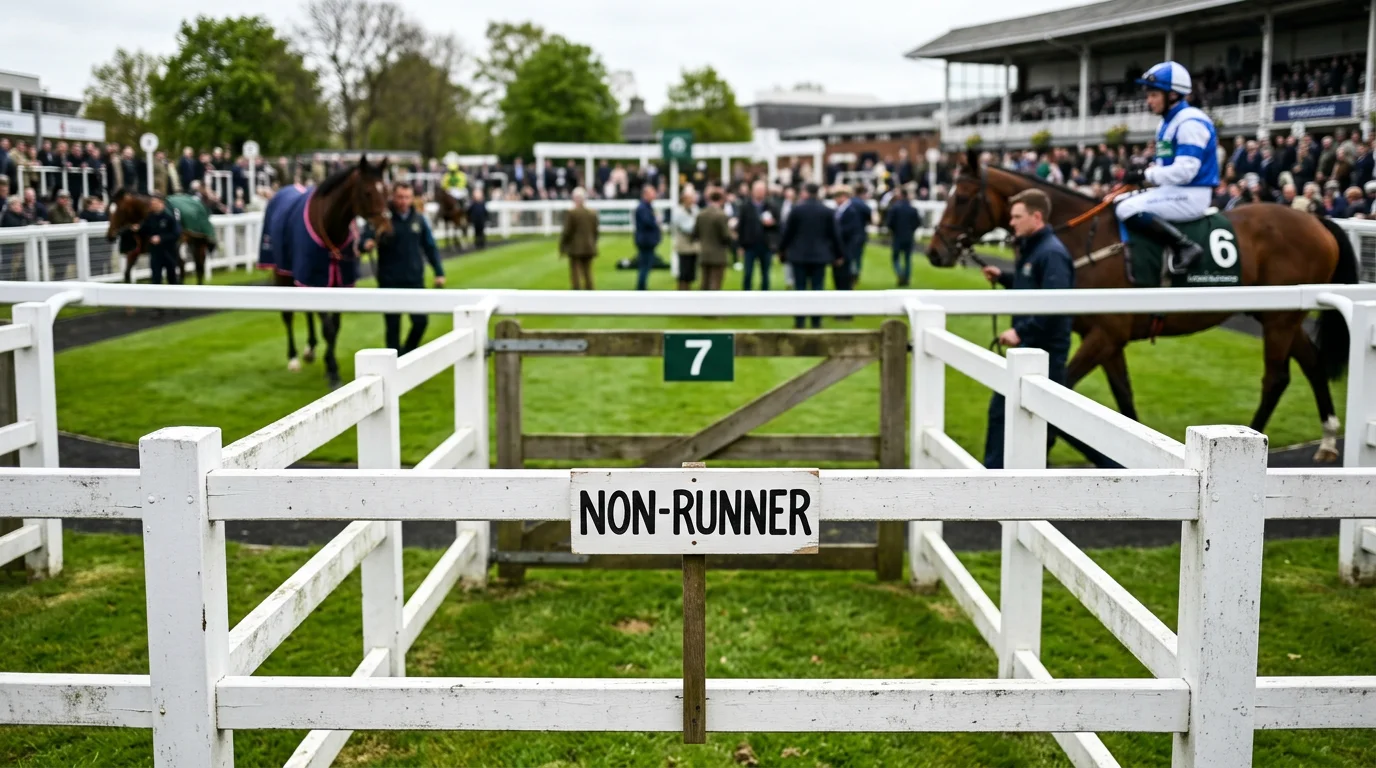
Ante-Post’s Biggest Risk, Solved
Ante-post betting’s biggest risk is the non-runner. You back a horse weeks before a major race at generous odds, the price shortens as race day approaches, and then — withdrawal. Injury, a change of ground, a trainer’s decision to wait for a different target. Your stake is gone, your bet is dead, and the bookmaker keeps the money. Non-Runner No Bet eliminates that risk entirely: if your selection does not run, your stake is returned in full. Insured from the withdrawal risk — and for ante-post punters, NRNB is the single most important promotional feature to look for. Non-Runner No Bet — More on this topic at online horse betting sites.
The BHA 2025 Racing Report recorded 21,728 horses in training, a decline of 2.3% year-on-year — a trend that has continued every year since 2022. Fewer horses in training means the population of potential runners is shrinking, and the withdrawal rate for major events remains a constant factor in ante-post markets. NRNB does not change the probability of withdrawal; it changes the financial consequence.
How NRNB Works
The mechanics are simple. When a bookmaker offers Non-Runner No Bet on a specific race or event, any bet you place on a horse that subsequently does not run is voided and your stake is returned — either as cash or to your account balance. The voiding happens automatically at settlement; you do not need to contact customer service or submit a claim.
NRNB applies only to the specific races or events where the bookmaker has declared it active. It is not a blanket policy — you cannot assume NRNB applies to every ante-post bet you place. The promotion is typically offered on the biggest events of the racing calendar: the Cheltenham Festival, Grand National, Royal Ascot, the Derby, and other marquee fixtures where ante-post betting volume is highest and bookmakers compete most aggressively for punters’ attention.
The conditions vary by operator. Some bookmakers offer NRNB from the moment their ante-post market opens for an event; others activate it only within a defined window — for example, four weeks before the race. Some apply NRNB only to specific races within a festival (the Gold Cup, the Champion Hurdle) rather than the entire card. Reading the specific terms before placing your bet is essential, because assuming NRNB coverage that does not exist is the same as accepting the withdrawal risk you were trying to avoid.
NRNB is distinct from a void bet on a day-of-race non-runner. When you bet on a horse on the day of the race and it is subsequently withdrawn, the bet is voided and the stake returned under standard industry rules — no NRNB promotion required. NRNB exists specifically for ante-post bets, where the default outcome of a non-runner is a lost stake.
Which Bookmakers Offer NRNB in 2026
The major UK bookmakers offer NRNB on the biggest racing events, though the scope and timing vary. Bet365 typically activates NRNB for Cheltenham Festival feature races, the Grand National, and Royal Ascot Group 1 races. The activation window and exact race coverage are published in the terms of each promotion.
Paddy Power offers NRNB on selected Cheltenham and Aintree races, often extending coverage to a wider range of festival races than some UK-only competitors — a reflection of the brand’s Irish racing investment. William Hill runs NRNB on the Gold Cup, Champion Hurdle, Grand National, and selected other feature events, with the Cheltenham Festival generating an estimated £450 million in betting turnover driving the most aggressive NRNB offerings across the industry.
Coral, Betfair Sportsbook, and Betfred all offer NRNB on major events, with coverage typically confirmed as each event’s ante-post markets open. Sky Bet provides NRNB on selected feature races. The availability is broadly consistent across the leading operators for the marquee events, but the edges emerge in the detail: which operator covers more races at Cheltenham, who extends NRNB further in advance, and whether the terms cover the entire festival or only the feature race each day.
Checking NRNB availability should be your first step before any ante-post bet. If two bookmakers offer the same odds on the same horse and one includes NRNB, the choice is automatic — the NRNB-protected bet has strictly higher expected value because it eliminates the non-runner loss scenario that the unprotected bet carries.
NRNB vs Rule 4: What’s the Difference?
Rule 4 and NRNB address different situations and should not be confused. Rule 4 applies when a horse is withdrawn from a race after the final declarations but before the off, on bets placed at fixed odds on the day of the race. The withdrawal changes the competitive balance — there is one fewer runner — so the remaining bets are subject to a deduction to reflect the changed market.
As Alan Delmonte, Chief Executive of the HBLB, has noted, the stability of Levy income despite turnover challenges reflects the industry’s resilience — and that resilience depends partly on fair settlement rules that maintain punter confidence. Rule 4 deductions are calibrated on a sliding scale based on the odds of the withdrawn horse: if a 4/5 favourite is withdrawn, the deduction is 65p in the pound; if a 14/1 outsider is scratched, the deduction is 5p in the pound. The deduction applies to your potential winnings, not your stake.
NRNB, by contrast, applies specifically to ante-post bets and returns the entire stake. There is no deduction — you simply get your money back as if the bet had never been placed. The two rules operate in different contexts: Rule 4 adjusts a day-of-race bet downward to reflect a changed field; NRNB voids an ante-post bet entirely when the selection is withdrawn.
Understanding both rules prevents confusion at settlement. A punter who places an ante-post bet without NRNB and sees the horse withdrawn will lose the stake with no recourse. A punter who places a day-of-race bet and sees a different horse withdrawn will have their payout reduced by the applicable Rule 4 deduction. Neither outcome is wrong — both are standard industry practice — but knowing which rule applies to which bet avoids unpleasant surprises.
Using NRNB Strategically
NRNB transforms ante-post betting from a high-risk gamble into a calculated strategy. With NRNB protection, the only risk of an ante-post bet is the same risk as any bet — that your horse runs and loses. The withdrawal risk, which is the defining hazard of the ante-post market, is entirely eliminated.
This means you can take early prices with confidence. A horse quoted at 16/1 for the Gold Cup in November, with NRNB, carries no additional risk compared to a day-of-race bet at 6/1. If the horse is withdrawn at any point, your stake comes back. If it runs and wins at the contracted 6/1 SP, you are paid at 16/1. The value advantage is clear and the downside is contained. See also Horse Racing Handicap Betting.
The optimal strategy is to identify NRNB-covered events, assess which horses represent genuine ante-post value, and place your bets as early as possible while NRNB prices are at their widest. The best ante-post events for NRNB betting are the major festivals — Cheltenham, Aintree, and Ascot — where NRNB coverage is widest, liquidity is deepest, and the price contraction between early markets and race day is most dramatic. Insured from the withdrawal risk — and free to focus on the only question that matters: whether the horse will win.
